Economists' Poll Reveals Surging Recession Fears in Australia
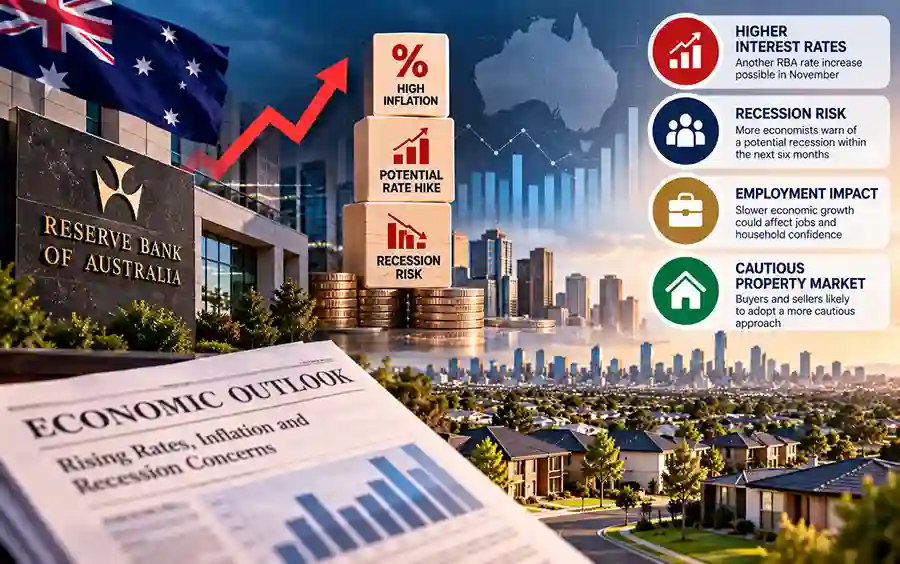
Australia’s economic outlook has become more uncertain as stubborn inflation increases the likelihood of another Reserve Bank interest rate rise and fuels concerns that the economy could slow sharply over the next six months.
The RBA has already lifted the cash rate to 4.60%, and Deputy Governor Andrew Hauser recently warned that the inflation outlook had become “materially worse”. Market expectations have shifted accordingly, with a November increase now considered a serious possibility.
Some economists are warning that if rates need to rise several more times, the risk of recession would increase materially. Former NAB chief economist Alan Oster said two or three further rate rises could clearly push the economy into recession, while other economists expect the RBA may only need one more increase before pausing.
For Melbourne’s western growth corridor, the biggest concern would be the effect of weaker economic activity on employment, household confidence and borrowing capacity.
If households become more cautious about job security or future income, buyers may delay property purchases even if prices become more attractive. Sellers may also be less willing to list unless they need to move, contributing to slower transaction volumes.
Higher interest rates would add another layer of pressure. Buyers could qualify for smaller loans, investors could face weaker cash flow, and existing homeowners may see mortgage repayments rise further.
At the same time, a more cautious market could create opportunities for buyers who have secure employment, strong savings and updated finance approval. Reduced competition may provide more time to inspect properties, compare recent sales and negotiate with vendors.
Investors may also find better entry prices, particularly where rental demand remains strong, but recession risk makes tenant affordability and employment stability more important considerations.
For sellers, realistic pricing would become increasingly important if buyer confidence weakens. Properties that are well presented and priced according to current conditions may still attract demand, while overpriced homes could take longer to sell.
The RBA itself expects economic growth to slow as earlier rate rises continue flowing through the economy, with unemployment likely to rise gradually.
Overall, recession fears do not mean a downturn is inevitable, but they do reinforce the need for caution. In Melbourne’s western growth corridor, buyers, sellers and investors are likely to place greater emphasis on financial resilience, employment security and realistic property values while the economic outlook remains uncertain.
Summarised by Ravs Realtors from reporting by realestate.com.au.