First Home Deposit Saving Time Increases

Australians are facing an increasingly long road to homeownership, with the latest Cotality affordability report showing that saving a standard 20% deposit for a median-priced house now takes an average of **11.9 years** nationally. For units, the estimated saving period is lower at around 8.8 years.
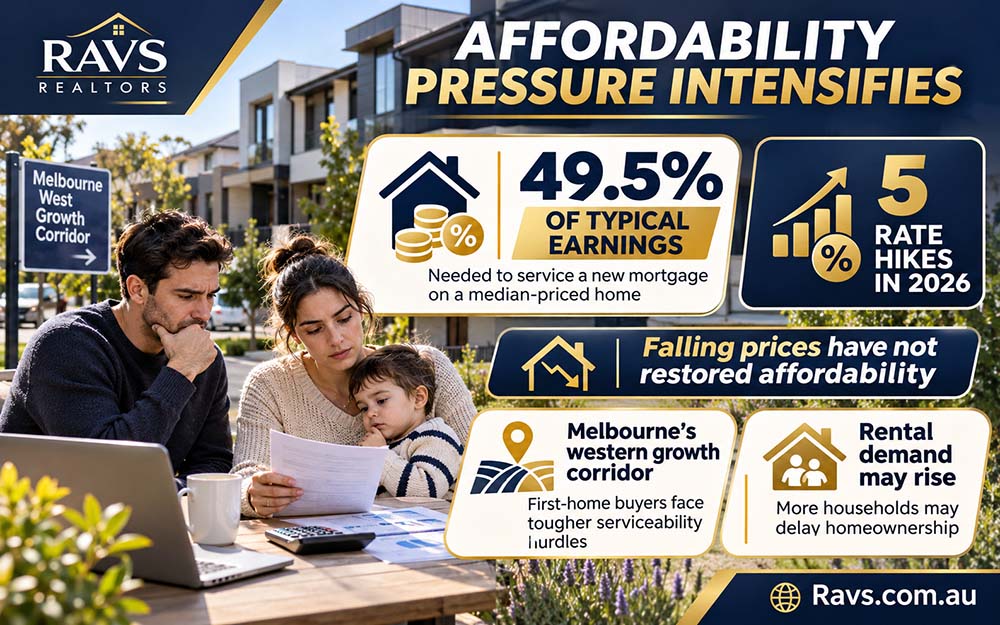
The figures come despite seven consecutive months of falling property values. While lower prices have reduced the size of the deposit required in some markets, higher mortgage rates and cost-of-living pressures continue to make it difficult for households to build savings.
Cotality says buyers now have more negotiating power than they did six months ago, but that has not necessarily translated into stronger purchasing capacity. Higher interest rates have offset much of the benefit from falling home prices, keeping affordability close to historically difficult levels.
For Melbourne buyers, there is at least some relative relief compared with several other capitals. Melbourne’s median dwelling value was equivalent to around 6.5 times household income in September, its lowest ratio since 2013. Melbourne units were also the most affordable unit market among Australia’s five largest capitals on Cotality’s measures.
That makes Melbourne’s western growth corridor increasingly important for first-home buyers looking for more accessible entry points. Areas such as **Melton, Wyndham Vale, Tarneit and Truganina** can offer lower purchase prices than many established inner and middle-ring suburbs.
However, a cheaper property does not automatically mean an easier purchase. Buyers still need sufficient borrowing capacity, a manageable deposit and enough income to meet repayments at current interest rates.
The extended saving period may also encourage more buyers to consider smaller homes, townhouses, units or locations further from central Melbourne in an effort to enter the market sooner.
For investors, delayed homeownership can support rental demand, particularly in affordable growth areas where younger households and families may remain tenants for longer.
Overall, the latest affordability figures show that falling property prices alone are not enough to solve Australia’s housing affordability challenge. For buyers in Melbourne’s west, affordable entry points still exist, but finance capacity and long-term repayment affordability are becoming just as important as the purchase price itself.
Summarised by Ravs Realtors from reporting by Michaelwest.