Foreign Buyers: Navigating Victoria's Property Rules

Buying residential property in Victoria as a foreign or overseas purchaser involves additional rules that need to be understood before signing a contract.
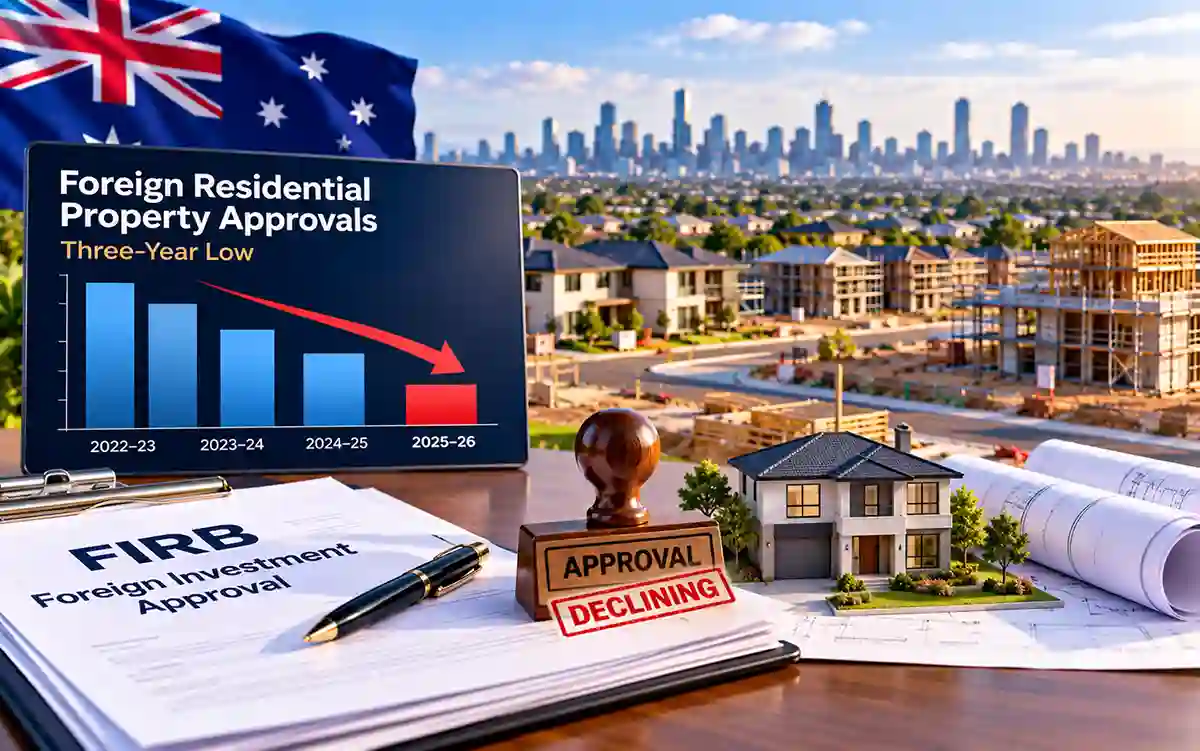
Foreign persons generally need foreign investment approval before acquiring residential property in Australia, with residential transactions effectively subject to a zero-dollar screening threshold. This means approval requirements can apply regardless of the purchase price.
A major restriction currently applies to established homes. From 1 April 2025 until 30 June 2029, foreign persons are generally prohibited from purchasing established dwellings in Australia, subject to limited exceptions. The policy is designed to direct foreign investment toward housing that adds to Australia’s overall supply rather than increasing competition for existing homes.
For most foreign buyers considering Victoria, this means the main residential opportunities are new dwellings, off-the-plan properties and vacant residential land intended for development.
New dwellings are generally treated more favourably because the investment contributes additional housing to the market. This can include newly completed houses, townhouses and apartments that have not previously been occupied, depending on the circumstances and approval requirements.
Vacant residential land can also be purchased by foreign investors, but conditions normally apply. Development is generally expected to be completed within four years, and investors need to ensure planning, finance and construction arrangements allow them to meet those obligations.
This is particularly relevant in Melbourne’s western growth corridor, where new estates, house-and-land packages and master-planned communities provide a significant range of newly constructed housing opportunities.
Foreign buyers should also remember that federal approval is only one part of the cost. In Victoria, foreign purchasers may also face Foreign Purchaser Additional Duty, while some owners can be subject to the Absentee Owner Surcharge on land tax unless an exemption applies.
Application fees may also be payable when seeking foreign investment approval, and the amount can vary depending on the type and value of the property.
Certain buyers are exempt from the foreign investment framework, including Australian citizens regardless of where they live, while permanent residents and some New Zealand citizens may also fall within exemptions depending on their circumstances.
Because the rules can differ according to residency status, property type, ownership structure and intended use, foreign buyers should confirm their position before entering into an unconditional contract.
For Melbourne’s western growth corridor, the current framework strongly favours investment that creates additional housing. New homes, off-the-plan developments and vacant land for construction are therefore likely to remain the most relevant options for overseas purchasers while the established-home ban remains in place.
Careful preparation is essential. Foreign buyers should understand approval requirements, additional Victorian taxes, development conditions and total acquisition costs before committing to a property.
Obtaining advice from a conveyancer or solicitor experienced in foreign investment, together with appropriate tax and finance advice, can help ensure the purchase complies with both federal and Victorian requirements. The FIRB approval process requires an online application through the Australian Government's Foreign Investment Portal. Application fees are set annually and vary based on the property's value. For the 2026-27 financial year, for example, the fee for a new dwelling or vacant residential land costing up to $1 million is $15,600, increasing to $31,300 for properties up to $2 million.
Beyond FIRB, foreign purchasers in Victoria face additional state-based costs. The Foreign Purchaser Additional Duty, or FPAD, is an 8% surcharge applied on top of the standard land transfer duty. This additional duty applies to foreign acquisitions of residential property and can also extend to non-residential property intended for residential conversion. This is a significant cost that must be factored into your overall budget, as it is separate from and in addition to the regular stamp duty.
Another important consideration is the Absentee Owner Surcharge, or AOS, which is an additional Victorian land tax. For the 2026 land tax year, this surcharge is 4% of the taxable value of land owned by an absentee owner, applied on top of general land tax. An absentee individual is generally someone who is not an Australian citizen or permanent resident, does not ordinarily reside in Australia, and meets certain absence criteria. If you are an absentee owner, you must notify the State Revenue Office.
Navigating these regulations requires careful planning and professional guidance. We strongly recommend consulting with a conveyancer or legal professional specialising in foreign investment, and an accountant for tax implications, to ensure full compliance and a smooth transaction. For local insights, speaking with a trusted local real estate agent can also be invaluable.