Meeting Victoria's Rental Minimum Standards
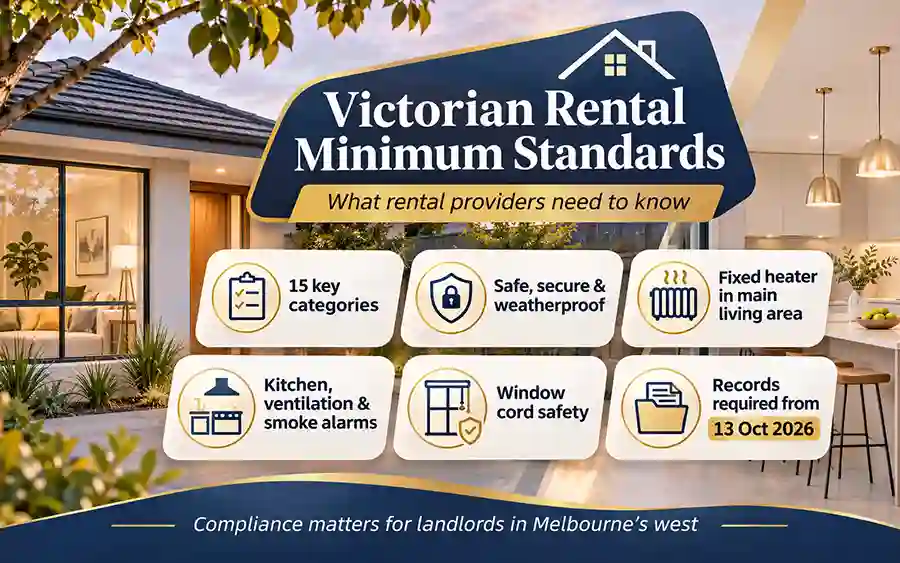
Victorian rental providers are legally required to ensure their properties meet minimum rental standards before they are advertised and throughout the tenancy. These rules are designed to make rental homes safe, secure and suitable to live in, and non-compliance can lead to urgent repair requests, penalties or other enforcement action.
The minimum standards cover 15 categories, including bathrooms, electrical safety, heating, kitchens, ventilation, locks, mould and damp, structural soundness, windows, window coverings and rubbish bins. Rental providers need to consider the property as a whole rather than focusing only on visible maintenance issues.
Heating is one of the key requirements. Every rental property must have a fixed heater in good working order in the main living area, and for rental agreements entered into from 29 March 2023, that heater must generally meet the energy-efficiency standard.
Kitchens must also meet basic functional standards. A rental property needs a dedicated cooking and food-preparation area, a working sink with hot and cold water, and a stovetop with at least two burners.
Ventilation and building condition are equally important. Habitable rooms, bathrooms, toilets and laundries must have adequate ventilation, while rooms must be free from mould and damp caused by the building structure. The property itself must also be structurally sound and weatherproof.
Window safety requirements have also tightened. From 1 December 2025, corded internal window coverings must have anchors fitted to prevent cords forming dangerous loops, adding another compliance point for landlords to check before leasing a property.
A major change from 13 October 2026 is the new record-keeping obligation. Rental providers and agents must now keep evidence showing the property met the minimum standards before it was advertised, offered for rent or occupied by the renter. Consumer Affairs Victoria can request these records if compliance is questioned.
For landlords in Melbourne’s western growth corridor, this makes proactive property management more important than ever. Regular inspections, prompt repairs and clear documentation can help reduce the risk of compliance issues while protecting the long-term condition of the investment.
The rules also reinforce the value of working with an experienced property manager who understands current Victorian rental legislation and can identify problems before they become disputes.
Overall, meeting the minimum standards is now a core part of owning an investment property in Victoria. Rental providers who keep their properties well maintained and maintain proper compliance records will be better positioned to protect both their renters and their investment.