Luxury Rents Soar, Widening Australia's Rental Divide
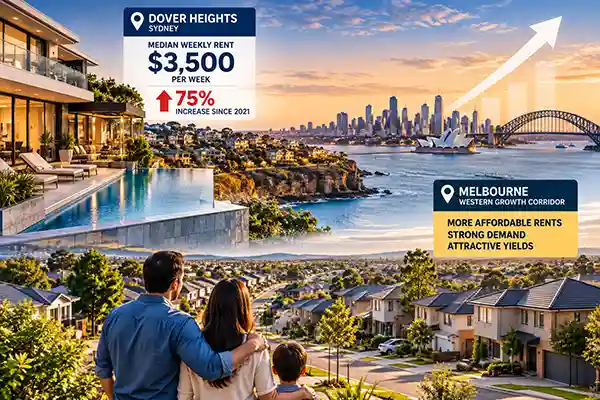
Australia’s rental market is becoming increasingly divided, with some prestige suburbs recording extremely high weekly rents while more affordable areas continue to attract strong demand from households priced out of premium locations.
Dover Heights in Sydney provides a clear example. Latest realestate.com.au data shows the median house rent at about $2,750 per week, while four-bedroom houses are commanding around $3,500 per week. This places the suburb among Australia’s most expensive rental markets.
The broader trend is significant because rental growth at the upper end of the market can contribute to movement across other price segments. Households that can no longer justify premium rents may look further from expensive inner-city and eastern-suburb locations, increasing competition in comparatively affordable markets.
For Melbourne’s western growth corridor, this affordability-driven movement could provide continued support for rental demand. Suburbs offering larger homes, newer developments, family amenities and relatively lower weekly rents may become more attractive as tenants search for better value.
This does not mean that rental conditions in Melbourne’s west will directly follow Sydney’s prestige suburbs. Local rents are influenced by different factors, including employment, transport, new housing supply, population growth and the availability of rental properties.
However, the wider affordability gap across Australian rental markets reinforces the appeal of locations where households can secure more space for a lower weekly cost. Melbourne’s western suburbs are well positioned in this respect, particularly for families and younger households seeking newer homes without premium inner-city pricing.
For investors, stronger tenant demand can improve occupancy and support rental returns. In areas where property prices have softened but rents remain resilient, gross rental yields may become more attractive compared with periods when capital values were rising rapidly.
Investors should still avoid assuming that rising rents automatically result in strong profitability. Mortgage costs, land tax, insurance, maintenance and property management expenses remain substantial, particularly in the current higher-interest-rate environment.
Property selection therefore becomes increasingly important. Homes close to transport, schools, shopping centres and employment opportunities may experience more consistent tenant demand than properties relying mainly on broader market growth.
The rental market can also respond differently across property types. Family houses, townhouses and units may each attract different tenant groups, meaning investors should examine local vacancy levels and achievable rents rather than relying only on suburb-wide averages.
For tenants, the widening difference between premium and affordable rental markets may encourage greater flexibility around location. Households may trade proximity to the CBD for larger properties, lower rents and access to growing suburban infrastructure.
That shift could provide longer-term support for selected locations across Melbourne’s western growth corridor as population growth and housing affordability continue to influence where people choose to live.
Overall, Australia’s luxury rental market illustrates how dramatically rents can vary between suburbs. While Melbourne’s west operates at a very different price point from areas such as Dover Heights, the broader affordability pressure may help redirect demand toward locations offering stronger value.
For investors, the opportunity lies not simply in chasing the highest rent, but in identifying areas where purchase price, tenant demand, rental yield and long-term local fundamentals remain well balanced.
Summarised by Ravs Realtors from reporting by Domain.