

What Wendy’s Melbourne Expansion Reveals About Growth Suburbs
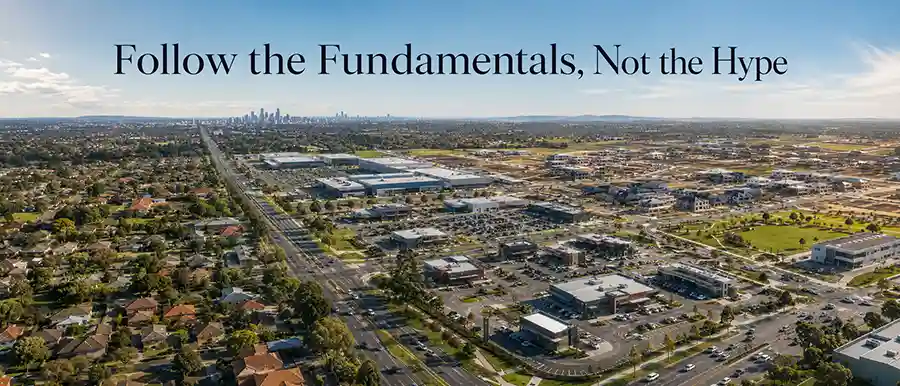
Major brands rarely choose new locations by chance. Their decisions often reflect population growth, road access, spending power and future development—factors that can also help property investors better understand the potential of Melbourne’s growth suburbs.
Strong opening demand in Dandenong South
Further Melbourne locations reportedly planned
Growth corridors remain attractive to major operators
When thousands of customers arrived at Wendy’s new Dandenong South restaurant during its opening week, the attention naturally focused on burgers, chicken tenders and the popularity of an international brand entering a competitive Australian market.
However, behind the queues is a much bigger property story.
For property buyers and investors, the important question is not simply why Wendy’s attracted so many customers. It is why a major international operator selected these particular locations—and what those decisions may reveal about Melbourne’s developing commercial and residential corridors.
Major Brands Rarely Choose Locations by Accident
Wendy’s Dandenong South location reportedly achieved the brand’s highest-performing opening week globally, selling close to 20,000 burgers, 30,000 chicken tenders and 6,500 Frostys. New locations are also reportedly progressing in Victorian areas including Manor Lakes, Seaford, Bayswater North and South Melbourne, alongside further expansion in Queensland.
Large restaurant, supermarket, fuel and retail operators normally undertake extensive research before committing to a new site.
They may examine:
- Current and projected population
- Passing vehicle numbers
- Nearby housing development
- Access from major roads
- Visibility and signage opportunities
- Parking availability
- Drive-through suitability
- Competition from established operators
- Distance from shopping centres and employment precincts
- Expected customer spending patterns
- Planning and development potential
The decision to open in Dandenong South reflects many of these fundamentals.
The broader Dandenong area is a significant transport, manufacturing and commercial centre connected to major routes including the Princes Highway, Monash Freeway, South Gippsland Highway and Dingley Freeway. The municipality is also recognised for its highly diverse population, food culture and established commercial activity.
A location with strong road exposure, surrounding employment, diverse customers and convenient vehicle access can be especially attractive to a drive-through restaurant operator.
For property investors, the lesson is clear: successful investment decisions often begin with understanding how people move, live, work and spend—not simply looking at a suburb’s current median price.
What Commercial Operators Study
Indicates whether the future customer base may continue expanding.
Supports visibility, convenience and steady vehicle movement.
Can generate regular demand from workers and commuters.
May signal confidence in the area’s long-term commercial potential.
Why Manor Lakes Is an Important Part of the Expansion Story
One of the reported future Wendy’s locations is Manor Lakes in Melbourne’s west.
This is particularly relevant because Melbourne’s western corridor continues to attract families, first-home buyers, builders, retailers and major service providers.
New communities require more than housing. As populations increase, demand grows for:
- Supermarkets and shopping centres
- Restaurants and takeaway food
- Medical and allied health services
- Childcare and education
- Fuel and convenience retail
- Warehousing and logistics
- Professional offices
- Entertainment and recreation
A proposed Wendy’s site at Manor Lakes is reportedly expected to involve an investment of approximately $750,000 to $1 million. Property reporting has also linked the brand to a location near the expanding Manor Lakes Central precinct.
This does not mean every nearby property will automatically rise in value. However, it may indicate that experienced commercial operators see sufficient population, traffic and spending potential to justify a long-term commitment.
That kind of commercial confidence can be one useful piece of a much broader property-investment assessment.
What Residential Investors Can Learn from Commercial Site Selection

Commercial operators and residential investors purchase different types of property, but many of the underlying location principles are similar.
Follow genuine demand
A suburb may appear inexpensive, but affordability alone does not make it a strong investment.
Investors should consider whether people genuinely want or need to live in the area. Population growth, employment access, transport, schools, shops and lifestyle facilities all influence long-term demand.
Understand the development pipeline
New housing estates can create opportunities, but investors should examine how much future land and housing supply is expected.
A rapidly developing suburb may benefit from population growth while simultaneously facing competition from many similar new properties.
Look beyond one announcement
A new restaurant or shopping centre can create attention, but a sound investment decision should never depend on one brand opening nearby.
The stronger signal is usually a collection of developments: new schools, road upgrades, health services, established retail, employment growth and sustained residential construction.
Consider accessibility
For commercial operators, convenient road access and visibility are essential.
For residential buyers, accessibility may include railway stations, bus services, freeway connections, employment precincts and practical travel times.
Examine the surrounding customer base
Major brands assess whether sufficient customers live, work or travel near a site.
Property investors should undertake a similar exercise. Who is likely to rent or purchase the property in the future? Families, professionals, students, downsizers and logistics workers may each prefer different locations and dwelling types.
The Drive-Through Format Is Influencing Commercial Property Demand
Wendy’s Australian rollout is being led by Flynn Group, which holds the brand’s Australian master franchise rights and has stated an ambition to establish 200 restaurants nationally by 2034. Wendy’s said its first Australian restaurant under the agreement opened on the Gold Coast in January 2025 and was expected to create approximately 30 to 40 jobs per location.
Reaching that expansion target will require access to suitable property.
Modern drive-through sites generally need a combination of:
- Prominent road exposure
- Safe entry and exit
- Adequate vehicle queuing space
- On-site parking
- Appropriate zoning
- Planning approval
- Proximity to established retail
- A sufficiently large local or passing customer base
Suitable sites with all these characteristics can be limited, particularly in established parts of Melbourne.
This may create greater competition among restaurant, fuel, convenience and retail operators for well-located land.
For landowners and commercial investors, the value of a site can therefore depend not only on its size, but also on its access, configuration, planning position and suitability for a specific end user.
Growth Suburbs Can Create Opportunities—but Selection Still Matters
Melbourne’s outer suburbs often attract attention because they offer newer homes, larger land options and comparatively accessible price points.
They may also benefit from expanding retail centres and increasing demand for everyday services.
However, investors should avoid treating every growth suburb—or every property within one—as equally attractive.
Two properties in the same postcode can perform very differently depending on:
- Street position
- Land size and layout
- Proximity to shops and transport
- School zones
- Build quality
- Floor plan
- Rental appeal
- Nearby construction
- Owners corporation costs
- Future competing supply
- Holding expenses
- Purchase price
A property located near expanding commercial infrastructure may offer convenience, but being directly beside a busy restaurant, loading area or high-traffic road could also affect noise, privacy and resale appeal.
Good investment planning requires balance.
Is a New Major Brand a Sign That a Suburb Will Boom?
Not necessarily.
Major brands can provide useful evidence that an area has commercial potential, but their decisions are made according to their own operating model.
A fast-food company may prioritise vehicle traffic, road frontage and drive-through access. A family purchasing a home may prioritise schools, neighbourhood character, parks and quiet streets. A residential investor may focus on tenant demand, holding costs and future supply.
These priorities can overlap, but they are not identical.
Property buyers should therefore treat major-brand expansion as a supporting indicator, not a guarantee of future capital growth.
No restaurant opening, infrastructure announcement or development proposal can guarantee an investment return.
Five Questions to Ask Before Investing Near a New Commercial Precinct
1. Is the surrounding population genuinely growing?
Review established population trends, future housing approvals and the scale of nearby development rather than relying only on marketing forecasts.
2. Is the infrastructure operating or merely proposed?
There is an important difference between a completed facility, an approved project and an early proposal that may be changed or delayed.
3. Will the development improve residential convenience?
Shopping, medical services, dining and employment can improve an area’s appeal, but traffic, noise and congestion should also be considered.
4. Is the property itself suitable for the target tenant?
A strong suburb cannot compensate for a poorly designed property, excessive price or unsuitable dwelling type.
5. Does the investment fit your personal strategy?
The right property for an investor seeking rental income may differ from one selected for long-term capital growth, future development or portfolio diversification.
Different Investors Need Different Property Strategies
A first-time investor may need to prioritise affordability, manageable repayments and broad tenant appeal.
An established investor may focus on portfolio diversification, land content, development potential or balancing cash flow across several properties.
A foreign investor may need to consider FIRB requirements, eligible property types, financing limitations, taxation, currency movement and property-management arrangements.
House-and-land buyers may compare land availability, builder inclusions, construction timelines, rental demand and the amount of competing new supply.
There is no single property strategy that suits every buyer.
The strongest approach begins with the investor’s budget, borrowing capacity, risk tolerance, income objectives and long-term plan—before a particular suburb or property is selected.
What Wendy’s Expansion Ultimately Tells Property Buyers
The success of Wendy’s in Dandenong South demonstrates how strongly consumers can respond when a recognisable brand, suitable format and strategically selected location come together.
Its proposed expansion into additional Melbourne suburbs also shows how major operators assess growth corridors, established commercial areas and emerging customer demand.
For property investors, the broader lesson is not to follow a burger chain blindly.
It is to study the same fundamentals sophisticated operators examine:
- Where is the population increasing?
- Where are people working and travelling?
- Which commercial centres are expanding?
- What services will future residents require?
- Is infrastructure keeping pace with housing growth?
- Is the property suited to future buyers or tenants?
- Does the investment remain sensible at the proposed purchase price?
Commercial expansion can help reveal where confidence is building. But careful property selection, independent due diligence and a personalised investment plan remain essential.
Strong investment locations are usually supported by several fundamentals working together—not one restaurant opening, one road project or one headline announcement.
Buyers should assess the property, the location, the price and the broader investment strategy together.
Plan Your Property Investment with RAVS REALTORS
RAVS REALTORS assists local, interstate and overseas clients with property selection, house-and-land opportunities, buyer support and tailored property-investment planning.
Our approach considers more than the headline attraction of a suburb. We examine the client’s objectives, budget, property type, location fundamentals, rental considerations, future supply and long-term investment direction.
Whether you are considering your first investment, expanding an existing portfolio or exploring an eligible Australian property from overseas, RAVS REALTORS can help you assess the available options and coordinate the next stages of your property journey.
Speak with Rav Sri to arrange a personalised property investment discussion.
Important Disclaimer
This article provides general real estate and property information only. It does not constitute financial, tax, legal, lending, migration or investment advice. Property values, rental returns, development plans, planning approvals, infrastructure projects and market conditions can change. Buyers and investors should conduct independent due diligence and obtain advice from appropriately qualified professionals before making a property decision. Foreign buyers should obtain independent advice about FIRB eligibility and all applicable Australian requirements.