

How Migration Is Reshaping Melbourne’s Property Market in 2026
Melbourne is changing faster than ever — and migration is one of the biggest reasons why.
From international students returning after the pandemic to skilled workers, interstate movers, and growing migrant communities choosing Melbourne as their home, population growth is dramatically reshaping the city’s property landscape.
In 2025 and beyond, migration is no longer just influencing Melbourne’s housing market — it is driving it.
For investors, homebuyers, developers, and first-home buyers, understanding how migration affects property prices, rental demand, infrastructure, and suburb growth has become essential.
Melbourne’s Population Boom Is Accelerating
Melbourne has long been one of Australia’s fastest-growing cities, but recent migration trends have taken growth to another level.
Victoria’s net overseas migration has rebounded strongly, contributing approximately 82,000–84,000 people annually, with around 90% settling in Melbourne.
Experts project Melbourne’s population could exceed 6.4 million by 2035 and potentially approach 9 million by 2050.
This growth is creating enormous pressure on:
- Housing supply
- Rental markets
- Infrastructure
- Transport networks
- Schools and hospitals
- New housing developments
And where demand increases faster than supply, property markets react quickly.
Why Migrants Are Choosing Melbourne
Melbourne continues to attract migrants because of its:
- Strong job market
- World-class universities
- Multicultural lifestyle
- Infrastructure projects
- Public transport connectivity
- International reputation for liveability
Skilled workers, students, and families see Melbourne as a long-term destination.
Many migrants initially rent properties before purchasing homes later, which means migration first impacts the rental market — then eventually boosts buying demand.
This creates a two-stage property effect:
Stage 1 — Rental Pressure
New arrivals increase demand for rental properties.
Stage 2 — Home Ownership Growth
After settling financially, many migrants transition into property buyers.
This long-term pipeline creates ongoing housing demand across Melbourne.
Melbourne’s Rental Market Is Under Pressure
One of the clearest effects of migration is the severe tightening of Melbourne’s rental market.
Vacancy rates across many Melbourne suburbs remain extremely low, while demand for affordable rentals continues climbing.
Migrants and international students often prefer suburbs close to:
- Public transport
- Employment hubs
- Universities
- Schools
- Shopping centres
- Community networks
As a result, areas around transport corridors and growth suburbs are experiencing strong rental competition.
Property investors are increasingly focusing on suburbs where migration-driven rental demand remains consistent.
Outer Melbourne Is Expanding Rapidly
Migration is not only transforming Melbourne CBD areas.
It is heavily reshaping outer suburban growth corridors.
Suburbs in:
- Wyndham
- Melton
- Casey
- Hume
- Whittlesea
are among the fastest-growing regions in Victoria.
These areas attract migrants because they offer:
- More affordable housing
- New estates
- Larger homes
- Better family value
- Infrastructure expansion
- Future growth potential
Popular growth suburbs like Tarneit, Truganina, Werribee, Clyde North, Mickleham, and Melton continue seeing strong buyer demand.
Developers are racing to keep up with demand, but housing construction still struggles to match population growth.
Housing Supply Cannot Keep Up
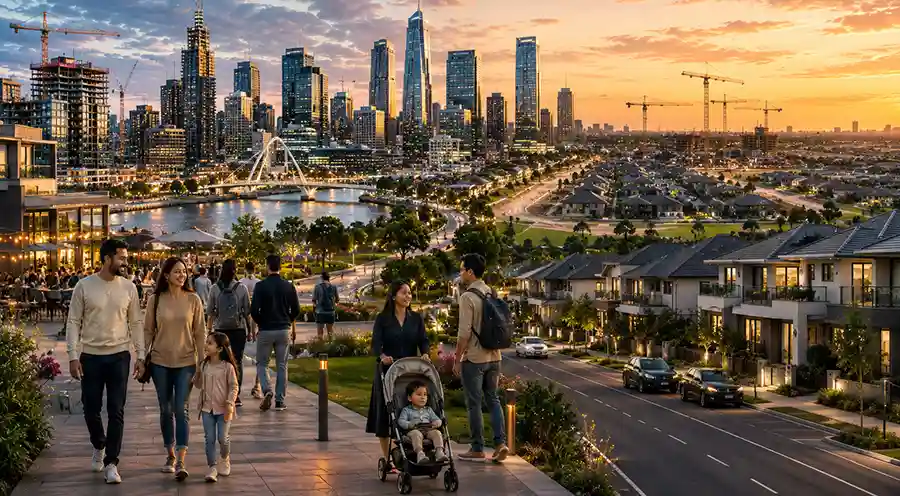
One of Melbourne’s biggest challenges is that housing supply is lagging behind migration growth.
Despite strong demand, the number of dwellings under construction in Victoria remains significantly below previous peaks.
Construction costs have surged dramatically in recent years, increasing development pressure across Melbourne.
This imbalance creates several market effects:
- Rising rents
- Increased competition
- Faster property absorption
- Strong long-term demand
- Price resilience in quality suburbs
When migration continues growing while supply remains constrained, housing markets generally tighten further.
Migration Is Changing Buyer Behaviour
Today’s Melbourne property buyers are very different from a decade ago.
Modern migrant buyers increasingly prioritize:
- School zones
- Community diversity
- Public transport access
- Healthcare access
- Lifestyle convenience
- Future capital growth potential
This is reshaping which suburbs outperform.
Affordable suburbs with strong infrastructure and multicultural communities are becoming highly desirable.
Previously overlooked suburbs are now experiencing strong price growth due to affordability and buyer demand.
Investors Are Returning to Melbourne
After several slower years, Melbourne is regaining investor attention.
Many interstate investors now see Melbourne as comparatively affordable compared with Sydney and Brisbane.
Strong migration levels, rental shortages, infrastructure spending, and population growth are improving long-term confidence.
Key reasons investors are returning include:
- Melbourne’s long-term population projections
- Tight rental conditions
- Relative affordability
- Major infrastructure projects
- Strong employment base
- Future capital growth potential
As migration continues increasing, investor demand is expected to strengthen further.
Infrastructure Projects Are Fueling Growth
Migration growth is forcing governments to expand infrastructure rapidly.
Major projects such as:
- Suburban Rail Loop
- Metro Tunnel
- West Gate Tunnel
- New schools and hospitals
- Transport corridor upgrades
are reshaping future property hotspots.
Infrastructure investment often creates long-term property growth by improving accessibility and livability.
Suburbs connected to future transport networks are likely to benefit significantly over the next decade.
Apartments Are Becoming More Important
As Melbourne’s population grows, housing density is becoming unavoidable.
Detached homes remain desirable, but affordability pressures are pushing more buyers toward:
- Apartments
- Townhouses
- Medium-density housing
Inner-city apartment demand is rebounding strongly due to returning migrants and international students.
This shift is changing Melbourne’s housing structure.
Over the next 10–20 years, medium-density living will likely become a much larger part of Melbourne’s property market.
What This Means for Buyers in 2026 and Beyond
Migration is not a short-term trend.
It is a long-term structural force shaping Melbourne’s future.
For buyers and investors, this means:
Demand Will Likely Stay Strong
Population growth continues driving housing demand.
Rental Markets May Remain Tight
Low vacancy rates support rental growth.
Growth Corridors Could Expand Further
Outer suburbs continue benefiting from affordability.
Infrastructure Will Become Even More Important
Transport-linked suburbs may outperform.
Well-Located Properties Could Become Scarcer
Supply limitations increase long-term value potential.
Final Thoughts
Melbourne’s property market is entering a new era.
Migration is reshaping where people live, what they buy, how they rent, and which suburbs experience future growth.
The city’s expanding population, combined with limited housing supply and massive infrastructure investment, is creating one of the most important property transformations Melbourne has seen in decades.
For smart buyers and investors, understanding migration trends is no longer optional — it is becoming one of the key factors behind successful property decisions.
Melbourne’s future will largely be written by the people continuing to move there.
And the property market is already responding.